

If you’ve been dealing with persistent back or neck pain that seems to come and go without explanation, you’re not alone. Millions of Americans experience this frustration every year, and for many, the underlying cause is degenerative disc disease. The good news? Understanding this condition and catching it early can make a significant difference in how you feel and function for years to come.
What Is Degenerative Disc Disease?
Despite its name, degenerative disc disease isn’t actually a disease at all. It’s a condition that happens when the soft, cushion-like discs between your spinal vertebrae begin to wear down over time. Think of these discs as shock absorbers for your spine. They help you move, bend, and twist comfortably every single day.
As we age, these discs naturally lose some of their water content and become less flexible. For most people, this happens gradually after age 40.
However, when the cushioning wears away enough, the bones in your spine can start to rub together. This is when you may begin experiencing real discomfort and mobility issues.
What Does Degenerative Disc Pain Feel Like?
One of the most common questions people ask is how to know if their back pain is caused by degenerative disc disease. The symptoms can vary from person to person, but there are some telltale signs to watch for.
Pain from degenerative disc disease typically:
- Affects your lower back or neck
- Ranges from mild stiffness to sharp, intense discomfort
- Comes and goes, sometimes lasting for weeks or months
- Gets worse after sitting, bending, or lifting
- May radiate down into your buttocks or legs
If these symptoms sound familiar, it may be time to speak with a healthcare provider who can evaluate what’s happening in your spine.
The Four Stages of Degenerative Disc Disease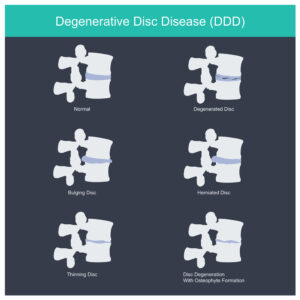
Understanding how degenerative disc disease progresses can help you recognize where you might be in the process and what steps to take next. Healthcare providers generally identify four distinct stages of this condition.
Stage 1: Dysfunction
In the earliest stage, your spinal discs are just beginning to show signs of wear. The discs may start losing their ability to retain water, causing them to become slightly dehydrated. Small tears or cracks might develop in the outer layer of the disc.
At this point, you might experience mild, occasional back pain. Many people brush off these early symptoms as normal aging or the result of a busy day. However, this is actually the best time to seek care, as early intervention can help slow the progression.
Stage 2: Dehydration
As the condition advances, your discs continue to dry out. They lose height and flexibility, which means less cushioning between your vertebrae. The space between the bones in your spine begins to narrow.
During this stage, pain often becomes more noticeable and persistent. You may find that certain movements trigger discomfort, and your back might feel stiff when you wake up in the morning.
Stage 3: Stabilization
At this point, your spine attempts to stabilize itself in response to the changes happening in your discs. Unfortunately, this natural response can sometimes create new problems. Spinal stenosis, a narrowing of the spinal canal, may develop. You might also notice the disc beginning to bulge or herniate.
Pain can become more severe during this stage, and you may experience symptoms radiating into your arms or legs as nerves become compressed.
Stage 4: Severe Degeneration
In the most advanced stage, the affected discs have lost significant height. Your body may respond by forming bone spurs along the edges of your vertebrae in an attempt to provide stability. These bony growths can press on nerves and spinal structures, causing chronic pain.
People in this stage often experience debilitating discomfort that interferes with daily activities. Walking, standing, and even sleeping can become challenging.
What Causes Degenerative Disc Disease?
While aging is the primary factor, several other elements can increase your risk of developing this condition or experiencing more severe symptoms.
Genetics plays a role. If your parents or grandparents dealt with back problems, you may be more likely to develop them as well. Lifestyle factors matter too. Smoking restricts blood flow to your discs, accelerating their breakdown. Carrying extra weight puts additional stress on your spine every single day.
Your occupation can also contribute. Jobs that involve heavy lifting, repetitive bending, or long hours of sitting can take a toll on your spinal discs over the years.
When Should You Seek Care?
Knowing when to see a healthcare provider is crucial. While occasional back pain is common, certain symptoms warrant professional attention.
Consider scheduling an appointment if you experience:
- Back or neck pain that persists for more than a few weeks
- Pain that interferes with your sleep or daily activities
- Numbness, tingling, or weakness in your arms or legs
- Difficulty walking or maintaining your balance
- Pain that doesn’t improve with rest or over-the-counter remedies
Early intervention gives you the best chance of managing symptoms effectively and maintaining your quality of life.
How Chiropractic Care Can Help
For many people dealing with degenerative disc disease, chiropractic care offers meaningful relief without surgery or heavy medication. Chiropractors focus on improving spinal alignment and reducing pressure on affected discs and surrounding nerves.
At N8 Family Chiropractic, the approach begins with a comprehensive examination. This includes a thorough review of your history, an evaluation of your joints, muscles, and nerves, and any necessary diagnostic testing to properly understand your condition.
Treatment plans are customized based on your specific needs. This may include spinal adjustments, spinal decompression therapy, and guidance on lifestyle modifications that support your spine health. The goal is always to return you to full, pain-free function so you can enjoy your favorite activities.
As noted by spinal experts, chiropractic care is recognized as one of several conservative treatment options that can help individuals find relief from degenerative disc disease symptoms.
Living Well With Degenerative Disc Disease
While you cannot reverse disc degeneration, there’s plenty you can do to manage symptoms and slow the progression. Staying active with low-impact exercises like walking or swimming helps strengthen the muscles that support your spine. Maintaining a healthy weight reduces stress on your discs. Avoiding smoking protects your spine’s blood supply.
Simple daily habits matter too. Pay attention to your posture when sitting at a desk or driving. Take regular breaks to stand and stretch. When lifting objects, bend at your knees rather than your waist.
Take the Next Step Toward Relief
If you’re in Lancaster, OH or the surrounding areas and dealing with back or neck pain that won’t quit, don’t wait for the discomfort to get worse. The team at N8 Family Chiropractic is ready to help you understand what’s causing your symptoms and create a plan to get you feeling better.
With multiple convenient locations, including West Lancaster, East Lancaster, Canal Winchester, and Newark, quality chiropractic care is closer than you think. Our professional team of providers and staff will provide you with the care that’s right for you.
Schedule your chiropractic appointment at N8 Family Chiropractic today and take the first step toward a healthier, more comfortable spine.
References:
https://my.clevelandclinic.org/health/diseases/16912-degenerative-disk-disease
https://www.spine.md/insights/stages-of-degenerative-disc-disease