“Healing at the speed of light” sounds like something out of a sci-fi movie, but it’s a fair description of what cold laser therapy sets out to do. Also called low-level laser therapy, it uses a gentle beam of infrared light to support your body’s natural healing in painful areas. No cutting, no noticeable heat, and typically no downtime. That’s a big reason so many people tired of living with pain are curious about it. To be clear, the speed is in the light, not the timeline. Results vary from person to person, and we’ll talk about what’s realistic for you.
If you’ve heard the name and wondered what actually happens in the treatment room, you’re in good company. New technology can feel intimidating, especially when it sounds like it belongs in a lab. Here’s what cold laser therapy is, what it may do for you, and what to expect at N8 Family Chiropractic here in central Ohio.
What Is Cold Laser Therapy?
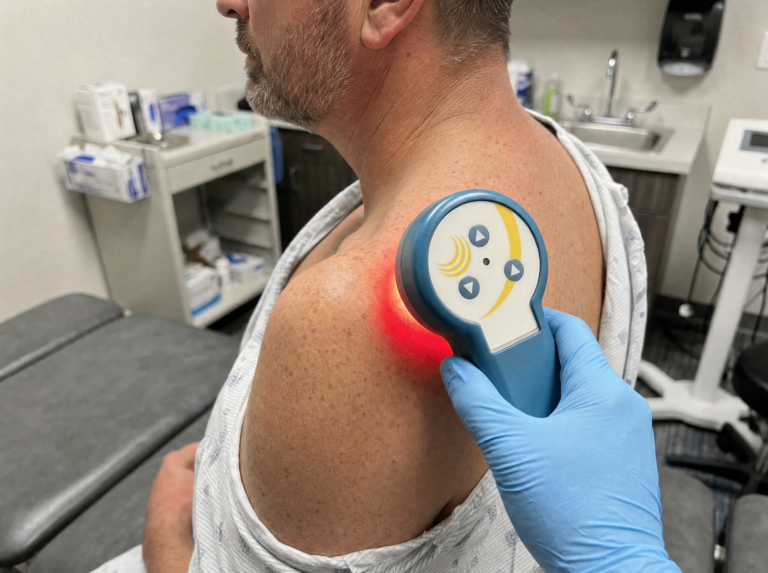
Cold laser therapy is a non-invasive treatment that uses low-intensity light to reach injured or irritated tissue. The word “cold” matters. Surgical lasers cut or burn. A cold laser doesn’t produce enough heat to damage your skin or the tissue underneath. Instead, it delivers light energy that your cells can absorb.
Our clinic uses an advanced super-pulsed cold laser with infrared light diodes, the small components that produce the light. Many patients get it alongside chiropractic adjustments. Your care team builds the plan around what’s going on in your body, not a one-size-fits-all routine.
How Does Low Level Laser Therapy Work?
Picture a plant turning toward the sun. It’s a loose comparison, but your cells respond to light in a somewhat similar way. When infrared light reaches the treatment area, your cells absorb that energy, and your body may use it to repair tissue and ease pain, helping an irritated area settle back toward normal.
Researchers call this process photobiomodulation. It’s a mouthful, but it basically means light influencing how cells behave. What matters for you is the idea behind it: the therapy is meant to support healing from the inside, not just cover up discomfort for a few hours.
Cold Laser Therapy Benefits: What Makes It Practical
Cold laser therapy is practical, and that’s part of its appeal. A super-pulsed laser can reach deeper into tissue, with extremely limited heat buildup. You can use it over metal appliances, so ask your care team how that applies to you. Sessions are short, and the light is aimed right at the spot that’s bothering you.
It’s also non-invasive, so you get a gentle option for working on pain without needles or incisions. Many patients like that it fits easily alongside other care, like chiropractic adjustments or treatments your other providers have recommended. Results vary from person to person, but these are real reasons it has become a regular part of many care plans.
What Does Cold Laser Therapy Feel Like?
Most people are surprised by how uneventful it feels. Your provider gently places the laser device over the affected area. While it’s running, there’s typically no heat and no pain. Some patients feel a slight tingling as the light interacts with the tissue. That’s about it.
Sessions are short, so you can usually walk in, get treated, and head back to your day. There’s typically no downtime to plan around. People who felt nervous about trying something new often relax pretty quickly once they see how simple it is.
What Happens at Your First Visit?
Your visit starts with a conversation about what you’re feeling and what you’d like to get back to doing. Your provider will examine the area, talk through your health history, and explain whether cold laser therapy fits your situation. If it does, it becomes one part of a plan built around you, often alongside chiropractic adjustments. You won’t be rushed into anything, and you’re welcome to ask as many questions as you need.
How Soon Will You Notice a Difference?
The honest answer is that it depends. Every body responds differently, and every condition does too. Some patients notice improvement after the first few sessions. Others need more treatments before they feel a change. Chronic issues, the kind that have hung around for months or years, usually respond more slowly than a recent injury.
We’ll talk through realistic expectations with you before you start, because cold laser therapy isn’t a magic switch. It tends to work best as part of a plan, and your care team will keep checking in on how you’re responding and adjust as needed.
Is Cold Laser Therapy Right for You?
Cold laser therapy is considered safe for most people, and side effects are rare when a qualified professional performs it. Because it doesn’t produce enough heat to burn the skin or the tissue underneath, it’s gentle by design. Some situations do call for caution, though. It’s generally not recommended over cancerous areas, directly on the thyroid gland, or on the abdomen of someone who is pregnant.
Your medical history matters here. Tell your care team about anything going on with your health, and they’ll help decide whether this treatment is right for you.
Curious? Bring Your Questions
Cold laser therapy might sound futuristic, but the idea behind it is pretty down-to-earth: gentle light, aimed at the right spot, supporting the way your body already heals. If you’ve been living with pain and want a non-invasive option, it may be worth a conversation.
Central Ohio families have trusted N8 Family Chiropractic for more than 25 years to explain their options clearly and build care around the individual. You don’t need to understand every detail before you walk in. Bring your questions, and we’ll go through them together.
Ready to See What Cold Laser Therapy Could Do for You?
If you’re ready to explore a gentle, high-tech option for pain relief, we’d love to meet you. Request a new patient appointment at https://www.n8familychiropractic.com/new-patient-appointment-request/ and let’s talk through your goals and what a plan could look like.